As an Amazon Associate, we earn from qualifying purchases. Some links on this site are affiliate links at no extra cost to you. Our recommendations are based on thorough research and editorial judgment.


How to Protect Skin and Eyes During Prep and Spraying

How do you keep your skin and eyes safe while spray painting? This is something that’s easy to overlook, but it’s super important. No one wants to end up with paint splatters or skin irritation after a project.
You may be interested


Start by grabbing some safety goggles and nitrile gloves. These will shield your eyes and skin from splashes and those pesky chemicals.
It’s worth considering tightly woven clothing or even disposable coveralls for some extra protection. Trust me—painting in a well-ventilated spot is key. Aim for a distance of about 15–25 cm from your surface when spraying. If you happen to get paint on your skin, don’t wait around; wash it off right away with soap and water.
Here’s the trick: make your workspace as safe as possible. This might mean choosing the right day to paint—preferably one with a nice breeze outside. That way, you’ll keep the air clear and reduce your exposure to fumes.
Honestly, protecting yourself during spray painting isn’t just about comfort; it’s about being smart and keeping things safe. You really can enjoy your painting projects without worrying about nasty skin reactions or eye irritation.
So, what precautions will you take next time you pick up that spray can?
Key Takeaways
- Always wear safety goggles made from impact-resistant materials to protect your eyes from splashes and airborne particles during prep and spraying.
- Use nitrile or butyl rubber gloves that fit properly to prevent skin contact with paint chemicals.
- Opt for long-sleeved shirts and long pants made from tightly woven fabrics to minimize skin exposure while working.
- Maintain a well-ventilated workspace to reduce inhalation of fumes and improve safety during spray painting.
- Immediately wash any paint that contacts your skin with soap and water to reduce irritation and prevent reactions.
How to Protect Your Skin and Eyes While Spray Painting
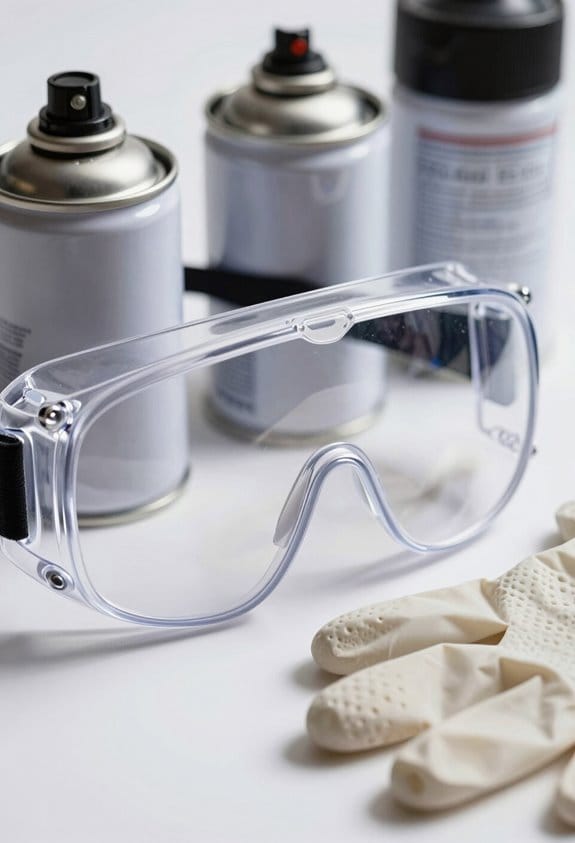
How can you effectively protect your skin and eyes while spray painting? It can be a bit tricky if you’re not prepared. One of the first steps is to gear up with the right protective equipment. Think safety goggles or a face shield—these really come in handy to guard your eyes against harmful splashes and those pesky airborne paint particles. Don’t forget a good pair of nitrile or butyl rubber gloves to keep your skin safe from paint chemicals.
Cover up your skin too! Long-sleeved shirts and long pants made of tightly woven synthetic materials can be lifesavers when it comes to preventing skin exposure during the spraying process.
And here’s something you might overlook: ventilation. It’s super important to make sure your workspace is well-ventilated. This helps to clear out harmful fumes that can irritate both your skin and eyes.
If paint does accidentally get on your skin, don’t panic. Just wash it off right away with some water and mild soap. Got paint in your eyes? Rinse them out with water for at least 15 minutes. It sounds straightforward, but it’s crucial to take action fast.
Additionally, wearing a properly fitted NIOSH-approved dust mask helps protect your respiratory system from inhaling harmful paint particles and fumes.
So why does all this matter? Protecting yourself while spray painting isn’t just about avoiding annoyance—it’s about staying safe. You’re taking the right steps for a smooth, enjoyable painting experience.
In short, good protective gear and careful practices make all the difference. Have you ever experienced a close call while painting? What steps do you take to keep yourself safe?
Recommended Products


Permanently Stops and Prevents Water Leaks in Concrete Cracks.

Best Choice for Laser Engraving: LaserPecker LP2 Laser Engraver with upgrade galvo technology for faster engraving. Max engraving speed of 1417 "/min and frame / graphic preview speed of 8858 "/min. 0.05 mm compressed spot for more details. 3 resolution options (1 K / 1.3K / 2K) for perfect details level
Essential Personal Safety Gear for Spray Painting Projects

When you dive into a spray painting project, safety gear isn’t just a nice-to-have—it’s a must. Have you ever thought about how quickly a few splashes can turn a fun weekend project into a disaster? For starters, always wear safety goggles. They protect your eyes from unexpected paint sprays and airborne particles that can lead to injury. Keeping your vision safe is super important.
Next up is the full-face respirator. Why’s it crucial? Well, it shields your respiratory system and your eyes, helping you avoid inhaling nasty chemicals. You’ll breathe easier knowing you’ve got that protection in place.
And don’t forget about your clothing! Wearing long-sleeved shirts and long pants made from tightly woven fabric creates a solid barrier against paint splashes. It’s not just about staying tidy; it’s about keeping your skin safe from irritation. If you want to go the extra mile, consider some disposable coveralls. They’re a great way to keep the paint off your skin and also help keep the workspace clean.
So, why does this matter? The more protective measures you take, the safer you’ll be during your painting projects. Trust me, following these steps will really make a difference in your painting experience.
In short, equip yourself with the right safety gear, and you’ll enhance your overall experience. Have you thought about how your project could go smoother with just a little extra protection? Give it a try! Remember to use a NIOSH-certified respirator to ensure maximum protection against hazardous fumes and particles while spray painting.
Recommended Products

DIRECTED AIRFLOW: Built-in air deflector allows users to direct the location of the airflow inside the headgear for increased control and comfort

The 3M 60923 Organic Vapor/Acid Gas Cartridge/Filter is a P100 approved filter that provides protection against certain organic vapors, acid gases, and particulates.

Can be adapted to papr or supplied air - flexible for multiple work environments. No need to inventory, train workers and fit test them on several respirators
Recommended Gloves for Chemical Protection During Painting

Have you ever started a painting project only to realize your hands aren’t protected? It’s easy to overlook that detail, but keeping your hands safe from chemicals is a must. Nitrile gloves are a solid choice for painting. They’re tough against solvents and last longer than you might think, which makes them perfect for most painting tasks.
If you’re dealing with strong paints or harsh solvents, think about switching to butyl rubber gloves. They provide better protection against skin irritation, and you definitely want to avoid any nasty chemical burns. The fit of your gloves is crucial—if they don’t fit right, chemicals can sneak in through any gaps and put you at risk.
Once your painting job is done, don’t forget to toss those disposable gloves right away. This helps you avoid any potential cross-contamination with your space or other projects.
Here’s the trick: always check the manufacturer’s guidelines. It’s important to make sure your gloves are compatible with the specific chemicals you’re working with. That way, you’re not just protecting your hands, but ensuring your safety too.
For added protection, consider the thickness and durability of gloves, as thicker gloves provide better resistance to tears and punctures during painting tasks.
Recommended Products

Pallet of Dealmed Nitrile Exam Gloves: 840 Boxes of 200 count medium nitrile gloves. Providing more protection and eliminating allergies associated with latex gloves. These pull-on closure medical nitrile gloves are expertly crafted out of nitrile material to provide optimal protection and comfort. They are both unisex and ambidextrous for a wide variety of fits.

Heavy-Duty Protection: Elevate your safety with our premium orange 8 mil nitrile bulk gloves. Engineered for superior puncture resistance, they form an impenetrable barrier against grease, gasoline, and various petroleum-based chemicals.

✔️ PINK WITH A PURPOSE: London Labs pink rubber gloves carry a mission beyond protection. The bold bubblegum fuchsia shade is a tribute to women’s hope, strength, resilience, and the ongoing fight for health and awareness. Designed for caregivers, busy moms, beauty pros and anyone who gives their best daily, these pink latex free gloves blend style with safety. More than basic gloves, they symbolize confidence, self-care, and a reminder that protecting yourself is powerful.
Best Eye Protection for Spray Painting
What’s the best way to protect your eyes while spray painting? You definitely want to start with a solid pair of safety goggles made from impact-resistant materials. They should fit snugly, which is crucial for keeping out paint splashes and airborne particles. I can’t stress enough how important eye protection is when you’re painting—seriously, a little care can save you from a lot of trouble later.
Now, for extra protection, consider a full-face respirator. It’s not just about protecting your lungs; these respirators cover your whole face, shielding your eyes from both harmful fumes and any potential splashes. Plus, they give you that added layer of safety that really makes a difference.
Here’s the trick: Look for goggles with anti-fog lenses. This feature is a lifesaver in humid conditions or during those longer painting sessions. And don’t forget to make sure your goggles meet ANSI Z87.1 standards. That way, you know you’re getting reliable safety gear.
Honestly, it’s a good idea to regularly check your goggles for scratches or damage. Dirty or cloudy lenses can really hinder your vision when you’re trying to concentrate on your work. If they’re looking worse for wear, it’s time to replace them.
Additionally, wearing a full-face respirator that provides total face coverage can maximize protection against airborne particles and organic vapors.
With these tips in mind, you’re well on your way to keeping your eyes safe while spray painting. So, what’s holding you back from grabbing your gear and getting started? Take that first step!
Recommended Products

210 Plastic Cleaner/Polish seals the pores in plastic surfaces with a micro-thin layer of shiny, protective wax, making it resistant to debris, oil, scratches, and eventual yellowing

Ultra-clear glass provides a bright and clear view of the underwater world. New-generation Trufit Technology design uses two skirts forcreating a comfortable, watertight seal.

DO NOT USE on (AR) anti-reflective lenses or AR coated lenses. See Product Images for guidance on if you have an anti-reflective lens or surface.
Create a Safe, Well-Ventilated Workspace for Painting
Creating a safe and well-ventilated workspace for painting is super important for keeping you healthy while you tackle your projects. Have you ever found yourself feeling lightheaded after a long painting session? That’s why it’s crucial to set up your space right.
To start, make sure your area is well-ventilated. Open windows or use exhaust fans to circulate fresh air and cut down on those pesky fumes. You’ll want to maintain a distance of about 15–25 cm from the surface as you paint to avoid getting sprayed with droplets.
Here’s a tip: Lay down drop cloths and use painter’s tape to protect surfaces and prevent paint splatters. It not only keeps the area tidy but also helps reduce the chance of irritating your skin or getting splashes in your eyes. Regularly check the air quality for VOCs (volatile organic compounds) to spot potential health risks.
Finally, don’t set up your painting project in a crowded space. It’s key to limit accidental contact—this lets you focus on your work without distractions or mishaps. Using respirator masks and safety goggles is also essential to protect your lungs and eyes from paint fumes and overspray during painting.
Tips for Keeping Your Skin Safe While Painting
Painting can be so much fun, but it can also leave your skin feeling a little worse for wear if you’re not careful. Have you ever finished a project only to realize your skin is irritated or has weird splotches? It’s not a great feeling. That’s why taking steps to protect your skin while painting is super important.
First off, grab some nitrile or butyl rubber gloves. These don’t just look cool; they actually resist solvents and protect your hands from any paint splashes. Make it a habit to wear them every time. And if you’re into spray painting, think about your outfit, too. Choose long-sleeved shirts and pants made of tightly woven synthetic materials. This kind of clothing helps shield your skin from those not-so-friendly paint chemicals.
Don’t forget about eye safety! Using snug-fitting safety goggles can really make a difference in avoiding eye irritation from paint particles. You want to keep your eyes safe while you get creative, right?
Once you’re done with your painting session, do yourself a favor and wash your hands and any other exposed skin immediately with mild soap and water. It’s an easy way to remove those pesky residual chemicals. Plus, if you’re someone who has sensitive skin, it might be worth trying out barrier creams before you even start painting. These creams create an extra layer that can help you avoid allergic reactions to those paint fumes and solvents.
For comprehensive protection, also consider wearing a well-fitted respirator with organic vapor cartridges to protect your lungs from hazardous paint fumes.
Truth is, caring for your skin while diving into your painting projects doesn’t have to be complicated. Just a little planning can go a long way. What are some of your favorite skin-saving tips while painting?
Recommended Products

Certified Protection for Medical & Industrial Use: Tested for chemical resistance and certified to ASTM D6319, ASTM D6978, and EN 455 Parts 1, 2, 3 & 4, London Labs exam-grade nitrile gloves meet global safety standards. Trusted by doctors, nurses, EMTs, dentists, caregivers, and first responders in clinics, hospitals and first aid kits. The professional Cobalt-blue color finish enhances visibility and cleanliness. London Labs nitrile gloves provide long-lasting protection and performance.

✔️ PREMIUM MEDICAL & INDUSTRIAL STANDARD: London Labs nitrile gloves are tested to meet U.S. and international medical gloves standards, including ASTM D6319, ASTM D6978, and EN 455 Parts 1–4. Designed for chemical resistance, they protect against fentanyl & chemotherapy drugs. London Labs disposable gloves are trusted by hospitals, labs, medical supplies and EMT professionals, these puncture resistant gloves offer safe, reliable protection for doctors, nurses, dentists & caregivers.

SPECIAL HYBRID COMPOUND: A perfect blend of materials from Nitrile and Vinyl creates low modulus formulation, increased comfort level, and providing better protection.
Safe Handling of Paint and Solvents
When you’re dealing with paint and solvents, what’s your first thought? Safety should top your list. Exposure to harmful chemicals can really mess with your health. It’s crucial to have personal protective equipment (PPE) on hand. Think nitrile gloves and safety goggles to keep your skin and eyes safe from irritation.
Mixing or pouring paint and solvents can be a risky business—so always do it in a well-ventilated space. This helps reduce the chance of inhaling those nasty volatile organic compounds. It’s also a good idea to keep all your containers clearly labeled. This way, there’s no chance of grabbing the wrong one and causing trouble by misusing a product.
Spills happen, don’t they? If you spill anything, don’t just shrug it off. Clean it up right away using absorbent materials. This can cut down on slippery floors and lower the risk of further exposure. One more thing—always check the manufacturer’s safety instructions. They’ve got the best tips for handling their products safely.
Also, consider using flexible caulks with waterproof protection to prevent leaks that could expose you to harmful substances during home improvement projects.
Truth is, following these safety tips can make a huge difference. So, what are you waiting for? Get prepared and stay safe!
What to Do if Paint Comes in Contact With Skin?
Accidentally getting paint on your skin can be frustrating, right? It’s definitely something that needs to be addressed quickly. Start by washing the area with soap and water as soon as you can—ideally within a few minutes. This can really help reduce any irritation from the paint.
If you’ve ended up with oil-based paint on your skin, you might need something a bit stronger to tackle it. Try using mineral spirits or rubbing alcohol to break it down before rinsing it off. For those pesky, stubborn stains or if your skin feels irritated, a skin-safe cream can be soothing.
Keep an eye on the affected area. If you notice swelling, blistering, or any severe reactions, that’s when it’s time to reach out for medical help. Don’t wait too long!
It pays to be prepared, so consider keeping paint removal supplies close by in your workspace. This way, you can deal with any paint mishaps quickly and reduce the chances of having any serious reactions. Frankly, it’s just better to be safe than sorry!
Using non-toxic solvents is also a good idea to minimize exposure to harmful chemicals during cleanup.
What’s your go-to method for handling paint spills on your skin?
Maintaining Your Safety Equipment for Effective Protection
Are you sure your safety gear is giving you the protection you need? Let’s be real—keeping your Personal Protective Equipment (PPE) in top shape should always be a priority. Regularly checking and cleaning items like your safety goggles and respirators isn’t just a good habit; it’s essential! You want to make sure there’s no debris blocking your vision or breathing.
When it comes to respirators, remember this: replace those filter cartridges after 40 hours of use, or sooner if you find it hard to breathe. Think about it—would you rather risk your health, or take that simple step of changing a filter? Storing your safety goggles properly can save you a lot of headaches down the line, too. A dedicated spot will keep them scratch-free, so your vision stays clear.
And let’s not forget about gloves. It’s easy to overlook them, but checking for tears or punctures could make a big difference in your protection against harmful substances. Honestly, damaged gloves just aren’t worth the risk!
Always follow the cleaning instructions from the manufacturer, too. Using the right materials not only maintains the effectiveness of your PPE but extends its lifespan as well. For respirators, selecting models with NIOSH approval ensures compliance with high safety standards for maximum protection.
Frequently Asked Questions
What Are the Eye Protection for Spraying Paint?
When spraying paint, we should wear safety goggles or glasses that fit snugly, and consider a full-face shield for added protection. Different goggles types offer varying levels of defense against splashes and airborne particles.
What to Wear When Using a Paint Sprayer?
When we gear up for using a paint sprayer, let’s choose proper clothing styles that cover our skin, don’t forget our safety gear like gloves and goggles. It’s essential to guarantee we stay protected!
How to Prevent Fish Eyes When Spray Painting?
To prevent fish eyes in our spray painting, we should focus on thorough surface preparation, ensuring cleanliness and proper paint adhesion factors. Using compatible primers and avoiding silicone products can greatly enhance our results.
Should You Wear a Mask When Using a Paint Sprayer?
Absolutely, we should wear masks when using a paint sprayer. Picture the swirling clouds of spray paint; without proper respiratory protection, we expose ourselves to harmful chemicals, risking long-term health issues from toxic fumes.


