As an Amazon Associate, we earn from qualifying purchases. Some links on this site are affiliate links at no extra cost to you. Our recommendations are based on thorough research and editorial judgment.


Spraying Ceilings Safely: Hose Management and Body Positioning Tips

When you’re spraying ceilings, one major thing to think about is how you’ll manage that hose and maintain a good body position. It’s easy to lose your balance or get tangled up, and that can be a real headache.
You may be interested


First off, keep your feet shoulder-width apart. This simple trick gives you the stability you need while you’re maneuvering the sprayer. Using flexible hose whips can really help too; they’ll cut down on fatigue and keep the hose from getting all knotted up.
Always pay attention to where the hose is placed—nobody wants a trip hazard in the middle of a project!
Another key point is making sure the spray gun is parallel to the ceiling. This helps give you better control over the spray and allows for a more even coat. Taking regular breaks is crucial as well; they don’t just prevent muscle strain but also help you stay focused on the task.
So, why does this matter? Staying safe and efficient will make your ceiling painting experience much smoother.
By managing the hose well and positioning your body correctly, you’ll not only work better, but you’ll also feel better after your session.
In summary, keep those feet planted, watch that hose, and don’t forget to take breaks. What tips do you use when spraying ceilings?
Key Takeaways
- Maintain feet shoulder-width apart to improve balance and stability while spraying ceilings.
- Use gun extensions to avoid excessive bending or stretching when reaching high surfaces.
- Position hoses away from foot traffic to prevent trip hazards and maintain a neat workspace.
- Keep a non-spraying hand for support during long spray passes around obstacles for added stability.
- Regularly inspect and properly coil hoses to ensure smooth paint flow and prevent kinks.
Key Safety Gear for Spray Painting Ceilings

When it comes to spray painting ceilings, safety can’t be overlooked. It’s easy to get caught up in the excitement of a new project, but without the right gear, you could be putting yourself in harm’s way.
Start with a respirator to keep those harmful paint particles out of your lungs. Honestly, it’s a must-have item if you want to breathe easy while working. Safety glasses are another essential—they protect your eyes from all that messy paint spray and any debris that might fly your way. If you’re doing this outside, a P95 dust mask is great for filtering out fine particles, giving you an extra layer of protection.
Don’t forget about gloves! They’re crucial for preventing injuries when using high-pressure airless sprayers. if your project involves flammable coatings like lacquers, wearing flame-resistant gear is smart. You definitely want to avoid any explosion risks, especially in areas with poor ventilation.
It might feel like an extra hassle to gear up, but trust me, taking the time to put on the right safety equipment creates a much safer environment. Be sure to select a mask with proper NIOSH certification to ensure effective filtration against contaminants. So, next time you’re ready to tackle that ceiling, just remember: safety first. What safety gear do you always make sure to have on hand?
Recommended Products

NIOSH-APPROVED OV CARTRIDGE WITH P95 FILTER filters at least 95 percent of solids and liquid aerosols as well as certain organic vapors

NIOSH-APPROVED 6001 OV CARTRIDGE HELPS REDUCE EXPOSURE to certain organic vapors encountered during activities involving latex and oil-based painting, including paint spraying, varnishes, stains, sealants, solvents, certain solvent-based cleaners or pesticides

PROTECTION : The AirGearPro G-500 Respirator mask and Safety Goggles are CE certified to ensure your protection during painting, woodworking, construction, sanding, renovation, demolition etc.
Understanding Hose Management While Spraying

Effective hose management is vital for a hassle-free spraying experience. Picture this: you’re in the zone, ready to tackle that paint job, but you trip over a tangled hose. Frustrating, right? To keep things smooth, make sure your hose stays tangle-free to avoid trips and spills while you’re spraying.
Try this: always secure the hose to the sprayer. It’s simple but it helps prevent those sharp bends that can mess with paint flow or even damage the hose. If you can, get flexible hose whips. They really help with maneuverability and can cut down on arm fatigue—something you’ll really appreciate as the day goes on.
Keep that hose positioned away from the spray area. Seriously, it’ll save you hassles later on, minimizing the risk of overspray ruining your work. Now, you might wonder why this matters. Well, a well-managed hose means you can focus more on your spray technique rather than constantly adjusting or untangling your line.
Also, let’s not forget about regular checks. Make it a habit to inspect the hose for any signs of wear and tear or leaks. It’s a quick step that guarantees everything runs smoothly and keeps you safe while you work.
Additionally, using equipment with non-slip platforms can enhance your stability while managing hoses during ceiling spraying.
Recommended Products
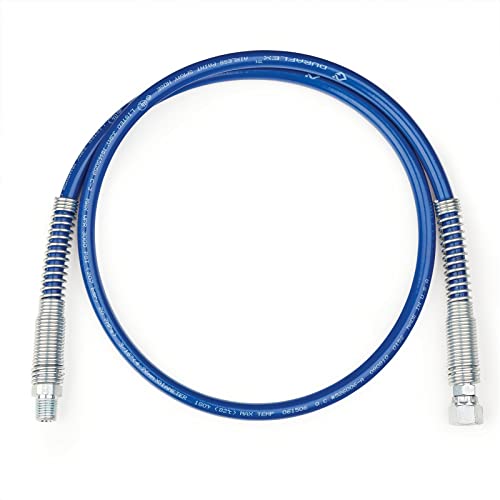
Connect whip hose between the spray gun and paint hose

Sprayer High Pressure Whip Hose, more convenient to cooperate with the joint connector

Wide Compatible: The airless paint sprayer hose can be adapted to most airless paint sprayer, 50ft hose can accommodate a variety of work areas. The sprayer swivel joint allows the spray gun to rotate 360 degrees, which can effectively prevent the high pressure hose entanglement and extending its service life. At the same time, you can connect the 50ft hose to the whip hose through the 1/4" hose connector. The whip hose is lighter and more flexible, making it more convenient to use.
How to Position Yourself Safely While Spraying?

Have you ever struggled to get your spray job just right while avoiding mishaps? Well, how you position yourself while spraying can make a big difference. A well-managed hose is important, but let’s talk about your stance.
Try this: keep your feet about shoulder-width apart. This simple adjustment helps with your balance, especially when you’re working with the spray gun up high. If you’re trying to reach those pesky ceilings, consider using gun extensions instead of bending or stretching too much—it’ll save you from a sore back later on.
Facing the area you’re spraying can really boost your visibility. Why does this matter? Because it helps you avoid straining your neck or back while you work. It’s also crucial to watch where your hose is placed. Crossing over it can lead to some serious trip hazards, and nobody wants a paint spill ending in an injury!
Here’s the trick: while spraying, use your non-spraying hand for support. This extra bit of stability is handy during long passes or when you’re weaving around obstacles. Honestly, a little extra effort in positioning can go a long way in making your spraying task safer and more efficient.
In short, solid body positioning and mindful hose placement are key to a safer spraying experience. Using equipment with secure locking systems can also enhance overall job safety. Have you thought about how you can improve your stance for that next project?
Recommended Products
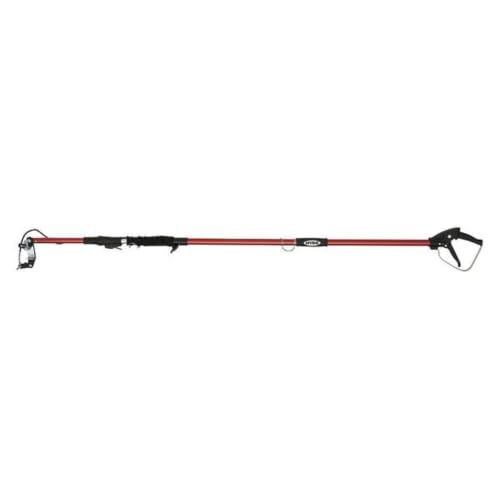
Quality & Craftsmanship you can count on: Increase your reach from 7 1/2-Feet up to 12 Feet, and improve your safety without needing to climb a ladder. The lightweight aluminum airless sprayer extension pole reduces arm fatique while increasing job performance.
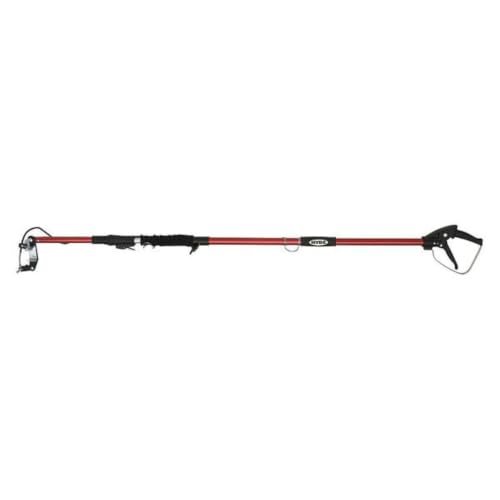
Quality & Craftsmanship you can count on: Increase your reach from 5 1/2-Feet up to 8 1/2-Feet, improve your safety without needing to climb a ladder. The lightweight aluminum airless sprayer extension pole reduces arm fatique.

PAINT SPRAYER EXTENSION: These free-to-assemble paint sprayer extensions will work great in saving time and reducing hand movement when you using an airless sprayer
Avoiding Trip Hazards With Your Hose
Trip hazards can really complicate any spraying job, can’t they? Managing your hose properly is key to keeping things safe and efficient. A helpful tip is to carefully coil your 50-ft airless sprayer hose to avoid any tangling. You might want to try using hose whips, either 3 or 5 feet long, which can make maneuvering around your work area a lot safer and easier.
It’s always best to avoid laying the hose across walkways or high-foot-traffic areas. Instead, think about designating clear pathways for yourself and your colleagues. This little change can make a big difference in reducing trip hazards.
If you’re working at heights, securing your hoses to walls or ladders with hose clips or straps can prevent that annoying entanglement. Frankly, it’s a simple step that adds an extra layer of safety. Plus, don’t forget to regularly inspect your hose for wear and tear. Damaged hoses can easily lead to spills or increased trip hazards, and that’s not something anyone wants to deal with on the job. Using puncture-resistant gloves while handling hoses can provide an additional layer of protection against sudden hose bursts or sharp edges.
Recommended Products

FIT FOR MOST 1/4" AIRLESS PAINT SPRAYERS: The hose connectors are compatible with Graco and most 1/4" Airless Paint Sprayers Hoses. The air paint sprayer hose connectors are replacement for Graco paint sprayer hose connector, which is suitable for projects that require longer hoses to reach These airless spraying machine quick connectors work perfectly with airless spray guns, extension rods, and paint hoses
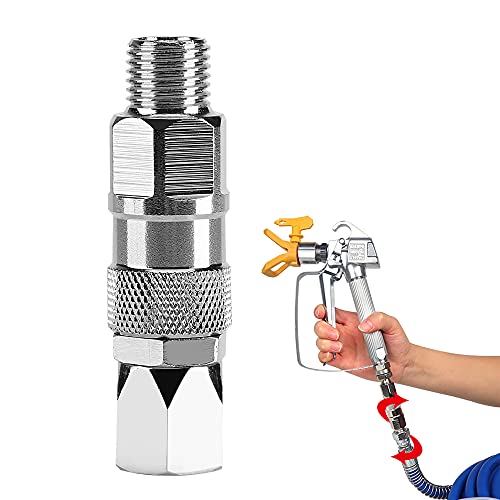
[ EFFICIENT WORK ] No knots when spraying, High-pressure rated for airless paint spraying applications
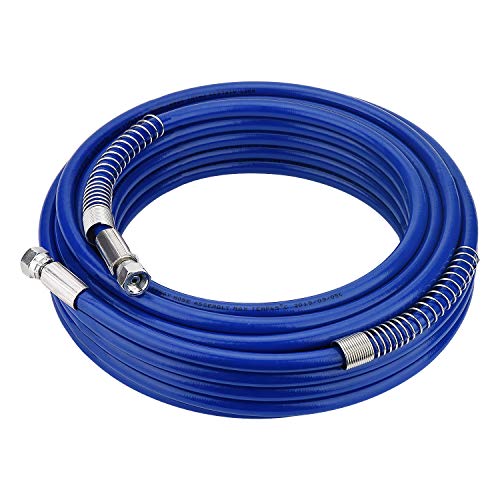
The airless hose is suitable for most common architectural paints and solvent based coatings.
Sprayer Control Techniques That Work
Spraying ceilings can be a bit daunting, can’t it? If you want to achieve that professional finish that makes all the difference, mastering your sprayer control techniques is key. For instance, when you’re using an airless sprayer, try to keep a distance of about 12-18 inches from the surface. This helps create even coverage and keeps overspray to a minimum.
Get comfortable with those long, sweeping motions, too. Aim for about a 50% overlap on each pass—that’s how you ensure uniformity. And don’t forget to engage the safety on your sprayer whenever you’re adjusting things close to the gun tip; it’s a simple step that keeps you safe while you work.
Ergonomics can’t be overlooked! Position your body properly by keeping the sprayer parallel to the surface. This not only helps you maintain control but also makes the process a lot easier on your back. Should you start at the edges and work your way to the center? Absolutely. Giving that technique a go will allow you to dial in your control quite effectively. Additionally, using sprayers with adjustable flow control can significantly enhance finish quality and minimize drips during ceiling applications.
Maintaining Comfort During Spraying Operations
Ever had one of those days where spraying feels more like a workout than a task? Comfort is really important when you’re in the middle of a spraying operation, and it can make a huge difference in how efficient you are.
To keep things comfortable while you’re spraying, consider using hose whips, like the 3’ or 5’ options. They can really help with maneuverability and reduce arm fatigue. And don’t just stand there! Keep your feet shoulder-width apart and bend those knees a little; it’ll give you better stability and help avoid back strain.
Now, let’s talk about technique. Starting with the highest points, like ceilings, is always a smart move. Use long sweeping motions to avoid awkward positions. Remember to change your body position regularly; shifting sides and angles can help you stay fresh and avoid muscle fatigue. Honestly, it’s surprising how much little adjustments can help.
Don’t forget to take breaks. They’re essential for letting your muscles recover and for keeping your spraying technique sharp. After all, a quick breather can be the difference between a smooth project and one that drags on and on.
In addition, using primers with low-VOC formulations can improve indoor air quality during spraying operations.
In the end, maintaining comfort while spraying can really boost your effectiveness. So, how will you keep comfort a priority the next time you tackle a job?
Troubleshooting Common Hose Management Issues
Have you ever had a spraying job go sideways because of a tangled hose? It’s frustrating, right? Proper hose management can really make a difference in how smooth your work goes. If you’re dealing with a mishap, check to see if your hose is coiled up the right way; kinks can block the paint flow.
Try this: invest in some hose whips. They make maneuvering a lot easier and cut down on the strain on your back, especially when you’re working at odd angles. Plus, stepping on or dragging hoses can cause them to break down and leak. Regular checks for wear and tear—like cracks or frayed bits—are key; it’s always best to replace a worn hose before it becomes a bigger problem.
Here’s the trick: when you spray, move the hose in a smooth, flowing action. This little habit can help keep control and prevents the hose from getting tangled up. An organized workspace not only makes things easier but shows off your professionalism, too. Choosing the right primer with fast-drying properties can help you complete your painting project more efficiently.
Recommended Products

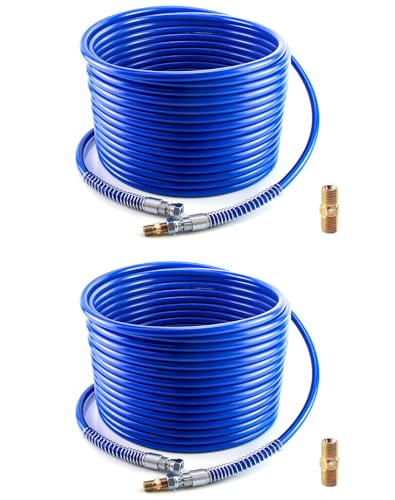
Size: 50 ft length, 1/4" female swivel-nut connections, 3300 psi Max working pressure.

Frequently Asked Questions
What Are the Safety Precautions for Paint Sprayers?
We’ve got to prioritize safety while using paint sprayers. Let’s always wear safety gear, handle equipment carefully, maintain good ventilation, and be prepared for emergencies. Our health should always come first in any spraying activity.
Which Direction to Spray a Ceiling?
We should spray the ceiling from one corner to the opposite side, using a sweeping motion. This spray technique keeps our coverage consistent and helps prevent streaks or missed spots in our work.
What Is the Number One Rule When Using Airless Spray Guns?
Think of our airless spray gun as a wild stallion; to tame it, we must always engage its safety. By doing this, our spray technique becomes skillful and safe, preventing unexpected accidents while we create.
How to Protect a Ceiling When Using a Paint Sprayer?
To protect a ceiling while using a paint sprayer, we should mask edges with painter’s tape, use drop cloths below, and maintain a consistent distance of 12-18 inches for even coverage and minimal overspray.


