As an Amazon Associate, we earn from qualifying purchases. Some links on this site are affiliate links at no extra cost to you. Our recommendations are based on thorough research and editorial judgment.

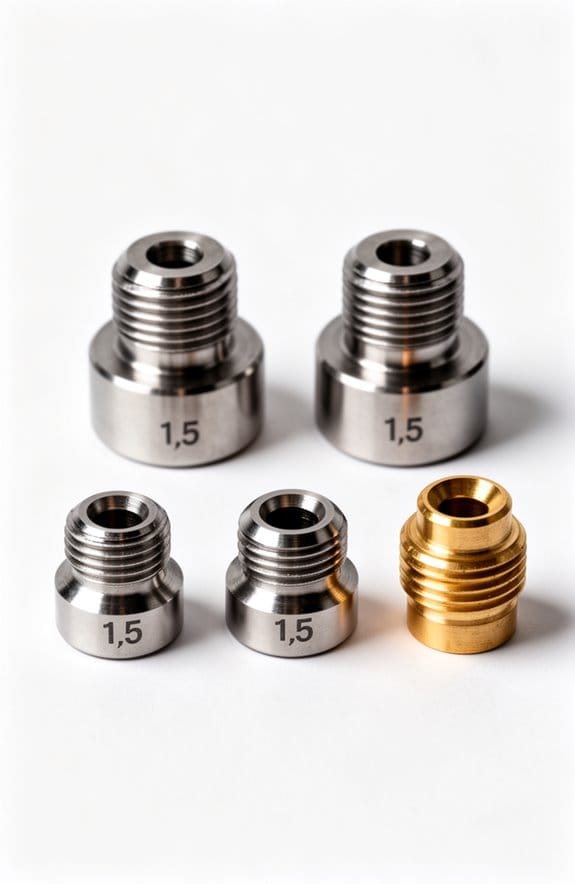
Spray Tip Sizes Decoded: How Orifice and Fan Width Affect Results

Have you ever picked a spray tip and wished you had a better understanding of what all those numbers really mean? It can be a bit confusing, right? The secret lies in the orifice size and fan width, which are both revealed by that three-digit code on the spray tip. For example, a 515 tip features a 10-inch fan and a .015-inch orifice.
You may be interested


Wider fans can cover larger areas quickly, making them your go-to for bigger jobs. On the flip side, narrower fans provide more control, which is crucial for detailed work.
So, how do you choose the right one? The orifice size should match the viscosity of the paint you’re using. This ensures optimized flow and coverage, preventing clogging or uneven application.
Here’s the trick: before starting your project, consider the surface and the materials. Ask yourself, do you need speed or precision? If you’re working with thicker paint, a larger orifice can be beneficial. For thinner materials, a smaller orifice will help prevent overspray.
The best part is knowing that a small adjustment can lead to better results. Spray tips can be a significant factor in how your project turns out, so invest a little time in understanding them. You’ll be amazed at how just a bit of knowledge can enhance your painting experience.
To wrap it up, mastering spray tip sizes isn’t just for the pros; it’s helpful for anyone looking to improve their projects.
What’s the next project you’re planning to tackle with your newly acquired spray tip knowledge?
Key Takeaways
- Spray tip codes are three-digit numbers; the first digit indicates fan width, while the last two digits indicate orifice size.
- Fan width affects coverage; wider fans quickly cover larger areas, while narrower fans allow for better control in detailed tasks.
- Orifice size is crucial; larger sizes accommodate thicker materials, while smaller sizes are suitable for thinner paints, ensuring optimal flow.
- Correctly matching fan width and orifice size prevents clogging, decreases necessary coats, and enhances the overall finish quality.
- Regular maintenance and timely replacement of spray tips are essential for maintaining optimal performance and achieved results in applications.
Understanding Spray Tip Codes and Their Impact

Have you ever found yourself scratching your head over spray tip codes when you’re about to tackle a painting project? It can be confusing at first, but once you get the hang of it, it makes all the difference.
Every spray tip has this three-digit code. The first digit, when multiplied by two, tells you the fan width in inches. For example, if you have a 515 tip size, it gives you a 10-inch fan width. The last two digits indicate the orifice size, which in this case is 0.015 inches. Selecting the right tip really matters. Bigger orifice sizes can handle thicker materials, making your airless spray jobs a lot smoother.
So, what’s the importance of knowing the spray angle? The first digit also corresponds to that. It helps you pick between wider and narrower fan patterns, which can totally change how even your spray job turns out.
Truth is, getting familiar with these codes empowers you to make smart choices while painting. Whether you’re working on a big deck or a small piece of furniture, using the right spray tip can significantly enhance your results and save you time.
In a nutshell, understanding spray tip codes is a key part of mastering your paint sprayer. Why not give it a try the next time you’re gearing up for a project? You might just find it makes the whole process a lot easier!
Additionally, just as choosing the right ergonomic handle enhances comfort and control in tools, selecting the right spray tip size ensures precision and efficiency in your spray work.
How Fan Width Affects Spray Technique?

Have you ever struggled with getting the right finish when painting? Understanding how fan width affects your spray technique is really crucial for nailing your projects. If you opt for a wider fan, like a 515 tip, you’re looking at a 10-inch spray pattern. This means you can cover big areas quickly, which is a real bonus when you’re pressed for time.
On the flip side, narrow fans give you better control for those detail-oriented tasks, like painting trim or cabinetry. Here’s the trick: if you keep the same orifice size when you switch to a wider fan, you’ll end up applying thinner layers of paint. This can really change how well your coverage turns out and the overall finish quality. So, if you’re working on smaller projects, try using narrow fans to cut down on overspray.
For thicker materials or if you’re tackling textured surfaces, wider fans come into play because they help distribute paint evenly. Just remember, fan width can seriously impact your results.
Truth is, getting your fan width right can make a huge difference in how your finished project looks. Plus, choosing the correct nozzle size is essential since sizes can range from 0.5mm to 2.5mm for different paint viscosities. So, what will you choose for your next painting adventure?
Recommended Products

Nozzle Size: 1.3 mm OBS-0 — optimized for humid climate base coat spraying
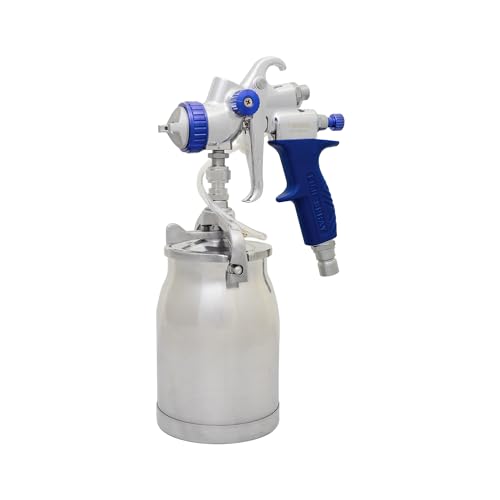
Professional Spray Gun features convenient side pattern control knob to adjust size of fan pattern from small to large

Paint Like a Pro - No pre-thinning needed! Our AtoMax tip allows you to reverse the tip when clogged to keep you spraying, delivers smooth, even coatings that rival the work of expert contractors. Experience minimal overspray, which saves on paint and reduces costs. Equipped with a robust, high-performance motor, the M3 airless paint sprayer ensures consistent, reliable results.
How Orifice Size Affects Paint Flow and Coverage

Ever had one of those frustrating moments when your paint job just doesn’t look right? Choosing the right orifice size for your spray tip can make all the difference. It’s not just about getting paint on the surface; it’s about achieving an even application and solid coverage that actually looks professional.
If you’re working with medium to thick coatings, go for a larger orifice size, like a “.017”. It’ll boost the paint flow, making those heavy materials a breeze to spray. On the other hand, if you’re dealing with thinner paints, a smaller tip, such as a “.009”, is your best friend. Trust me, matching the orifice size to the material’s viscosity matters—thicker paints can really clog up those smaller openings, causing all kinds of hassles.
Here’s a trick: using the right orifice doesn’t just help the paint go on smoothly; it can also minimize the number of coats you need. Imagine cutting down on your spraying time while still getting that perfect finish! Plus, by controlling the thickness of your paint layer, you won’t even need to change the spray fan angle. That’s a win-win for your efficiency!
So, why does this matter? It really boils down to making your life easier and your projects look top-notch. The right orifice size can help you achieve better coverage, and it just feels good when everything works out smoothly. For lacquer specifically, optimal nozzle sizes between 1.3mm and 1.7mm are recommended to balance detail and broad surface coverage.
In a nutshell, picking the right orifice will not only improve your spraying process but make your work stand out. What’s the next project on your list, and how will you tackle the orifice size?
Recommended Products

Standard Large Barrel Tip 817, 10pk

Reversible Tip -.017" Orifice 4-6" Fan 10-Pack

How to Choose the Best Spray Tips for Different Coatings
How do you ensure your paint job not only looks fantastic but stands the test of time? Choosing the right spray tip is key, and it starts with understanding the viscosity of your materials. For thinner products like stains, you’ll want orifice sizes between .009 and .011. If you’re tackling heavier coatings like latex paints, opt for larger orifices, around .021 or .025.
You might be wondering, what’s the deal with the spray tip code? The first number actually indicates the fan width. For example, a 517 tip gives you a 10-inch spray fan, which is just right for covering large areas more quickly. Here’s the trick: pick tips that match your sprayer’s maximum orifice size for the best quality. When it comes to latex applications, tips in the 415 to 517 range usually do the job well.
Frankly, always check the manufacturer’s guidelines. It might seem like an extra step, but it can save you a lot of headaches down the road and help you achieve those peak results.
In the end, taking the time to select the right spray tip can make all the difference in your project. HVLP technology’s ability to reduce overspray while maintaining high paint transfer efficiency makes matching spray tips crucial for optimal coverage and minimal waste.
So, are you ready to ensure your paint job lasts?
Recommended Products

5-Stage turbine produces 9.5Psi
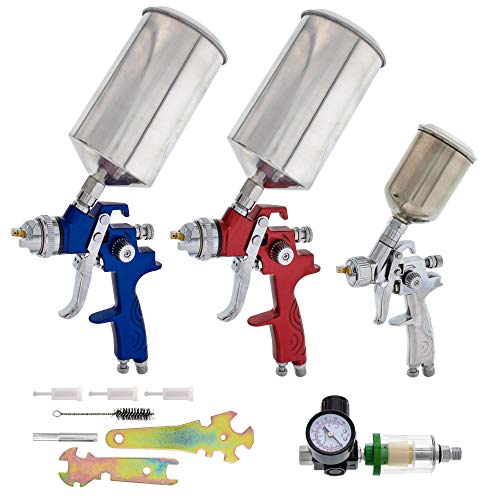
Three Nozzle Sizes: The set includes a 1.0mm, 1.4mm, and 1.8mm stainless steel tip. The paint spray gun sizes are for different applications, from small touch-ups to primer and topcoat work.

Package contents: 6 sets of paint spray gun with yellow reversible 517 tip and red universal tip guard; The red airless sprayer nozzle seat guard will protect your sprayer gun from scratches and keep its effectiveness
Common Mistakes to Avoid When Choosing Your Spray Tip
When choosing a spray tip, how can you avoid those frustrating mistakes that can mess up your whole project? It’s all about understanding your materials. For instance, if you’re working with thin paints or stains, you’ll want a smaller orifice size. On the flip side, thicker materials need larger sizes to ensure good flow.
It’s also super important to check the maximum tip size for your pump. Going over that limit can create pressure problems you definitely don’t want. Have you ever noticed how uneven spray can ruin a paint job? Ignoring the fan width can lead to just that. Wider fans work best for larger surfaces, while detailed work really benefits from a narrower fan.
And let’s not forget those manufacturer recommendations. They usually have great insights on the ideal orifice sizes for different coatings—so take advantage of that advice!
Another thing to keep in mind is the signs of tip wear. If you start seeing uneven spray patterns, that’s a red flag. It can seriously mess with the quality of your finish, requiring extra passes just to get decent coverage.
In short, paying attention to these details can save you time and effort down the line. So, next time you’re picking a spray tip, give these tips a thought—what’s your go-to trick for getting it right? Also, consider models with adjustable pressure settings to help optimize your spray tip performance and achieve flawless finishes.
Recommended Products

✅AN AUTO DETAILING NECESSITY: A tool that every auto detailing enthusiast should have! Leave the bucket methods behind and ease your car/truck/boat washing experience with a premium foam cannon. Layers of thick foam create lubricity and help reduce the chances of harming your vehicles paint, wheels, trim, or other delicate surfaces.

Used for residential and commercial applications

Tips for Extending the Life of Your Spray Tips
Do you ever feel like your spray tips just don’t last as long as they should? It can be frustrating, especially when it feels like you’re constantly replacing them. Luckily, there are some simple yet effective ways to extend their life and keep them working smoothly.
First off, using the lowest pressure necessary for effective atomization can make a big difference. This simple tweak reduces the wear and tear on your spray tips and helps them last longer. Another good practice is to regularly strain your materials before spraying. This step cuts down on grit and other debris that can lead to clogging and early wear.
When it comes to cleaning your spray tips, be sure to choose nylon or soft bristle brushes. Using metal brushes might seem tempting, but they can actually damage the tip orifice. It’s all about keeping that precision intact, right? Also, keeping an eye on wear is crucial—if the fan size drops by 25%, it’s time to replace the tips. You really don’t want to push them past their limits!
Lastly, don’t forget about storage. Spraying tips should be kept in protective solutions like Pump Armor to prevent corrosion. So, why does this matter? Maintaining your tools not only saves you money over time, but it also ensures your work is up to par, which is what we all aim for. Additionally, understanding the adhesion strength of your materials can help you select the right type of spray tip and ensure compatibility for a flawless finish.
Recommended Products


PULL DOWN SPRAYER: The pull down bathroom faucet makes quick work of cleaning toothpaste and dirt from your bathroom sink. MagnaTite Docking uses a powerful magnet to snap the pull down sprayer into place so it stays docked and doesn’t droop over time

PULL DOWN SPRAYER: The pull down bathroom faucet makes quick work of cleaning toothpaste and dirt from your bathroom sink. MagnaTite Docking uses a powerful magnet to snap the pull down sprayer into place so it stays docked and doesn’t droop over time
Frequently Asked Questions
How to Read Spray Tip Sizes?
To read spray tip sizes, we note the three-digit code indicating fan width and orifice size. Understanding spray tip definition, types, and impact will enhance our application techniques and help with pressure adjustments and maintenance tips.
What Is the Difference Between 1.3 and 1.4 Spray Tip?
The difference between 1.3 and 1.4 spray tips lies in their material compatibility and spray performance. We’ve found that tip selection guidance impacts coverage efficiency and pattern consistency, so let’s consider pressure effects and application techniques carefully.
What Shape Will the Spray Pattern Be When the Fan Adjustment Valve Is Closed?
When the fan adjustment valve’s closed, the spray pattern shape becomes circular or cone-shaped. We see closed fan effects increase pressure, impacting coverage uniformity, fluid dynamics, and application techniques based on nozzle design variations and spray tip adjustments.
What Is the Difference Between 415 and 515 Spray Tip?
Choosing between 415 and 515 spray tips is like picking paintbrushes for different canvases. The 415’s precision suits fine details while the 515 enhances coverage. Each tip’s performance hinges on flow rate, pressure settings, and maintenance.


